
The University of British Columbia is a top choice for many, with a acceptance rate that shows its high standards. For the class of 2025, UBC accepted about 54% of applicants. This means getting in is tough but possible with the right skills and effort.
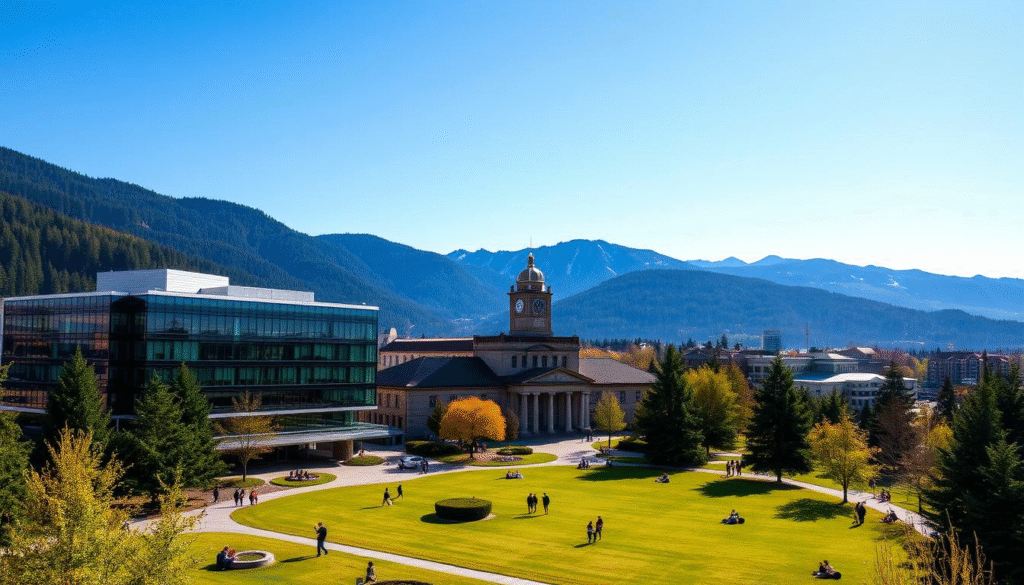
This acceptance rate tells us that UBC is selective but not impossible to get into. Knowing the UBC acceptance rate helps students understand their chances. It guides them in preparing their applications.
Key Takeaways
- The University of British Columbia has an acceptance rate of around 54%.
- UBC is considered moderately competitive.
- Understanding the acceptance rate can help prospective students plan.
- A strong application is key for admission.
- Qualifications and preparation are vital in the admissions process.
Overview of University of British Columbia
The University of British Columbia is known worldwide for its focus on innovation and academic excellence. It has two main campuses, in Vancouver and Okanagan. UBC offers a wide range of academic programs and research opportunities.
Campus Locations and Facilities
UBC’s Vancouver campus is right on the Pacific Ocean. It provides a unique learning setting. The campus boasts state-of-the-art facilities and a diverse student body.
Vancouver Campus Highlights
- Renowned research facilities
- Diverse student organizations
- Extensive library resources
The Okanagan campus is in Kelowna. It offers a more personal learning experience. It focuses on student engagement and community involvement.
Okanagan Campus Highlights
- Smaller class sizes
- Strong community ties
- Modern facilities
Academic Reputation and Rankings
UBC is known globally for its academic excellence. Ranked #38 in the QS World University Rankings 2025, UBC is highly competitive. The Vancouver campus has an acceptance rate of about 44%.
Looking at ubc admission rate data, the Okanagan campus has a higher acceptance rate of 71%. This makes it a good option for students who may not get into Vancouver.
University of British Columbia Acceptance Rate Analysis
Knowing the acceptance rate at the University of British Columbia is key for students. It shows how selective the university is. The rate changes each year, based on many factors like the number of applicants and their grades.
Overall Admission Statistics
In 2025, the University of British Columbia got over 60,000 applications. With an acceptance rate of 54%, it’s clear the admissions are tough. More than half of the applicants made it in.
Acceptance Rate Trends (2018-2023)
Looking at the acceptance rate from 2018 to 2023 shows ups and downs. The rate has mostly gone down, making it even harder to get in.
| Year | Acceptance Rate |
| 2018 | 56% |
| 2019 | 55% |
| 2020 | 54% |
| 2021 | 53% |
| 2022 | 52% |
| 2023 | 54% |
Domestic vs. International Student Acceptance Rates
The acceptance rate for domestic and international students is different. Domestic students usually have a higher rate, often over 60%.

Domestic Students: Domestic students often get in at a rate above 60%.
International Students: International students face tougher competition, with rates often under 50%.
Acceptance Rates by Faculty and Program
Admission to UBC is specific to each program. The competitiveness varies across faculties. Each faculty has its own set of programs and admission rules.
Most Competitive Programs
UBC’s Sauder School of Business, Engineering, and Medical and Health Sciences are very competitive. These programs draw top applicants, leading to lower acceptance rates.
Sauder School of Business
The Sauder School of Business is known for its tough academic programs. This makes it a highly competitive faculty. The acceptance rate for business programs is generally lower due to high demand.
Engineering Programs
UBC’s Engineering programs are highly respected. The faculty is competitive. The acceptance rate varies by engineering discipline but remains competitive overall.
Medical and Health Sciences
Medical and Health Sciences programs at UBC are very competitive. They have a selective admission process. These programs have strict requirements, leading to lower acceptance rates.
Programs with Higher Acceptance Rates
Some UBC programs are less competitive. These include programs in the humanities and social sciences. The applicant pool for these programs is often less competitive.
Graduate vs. Undergraduate Admission Rates
Graduate programs at UBC generally have higher acceptance rates than undergraduate programs. This is because graduate programs are more specialized. They attract applicants with specific academic backgrounds and research interests.
The acceptance rates for graduate programs vary by faculty and program. For example, some master’s programs may have higher acceptance rates than Ph.D. programs. This is due to differences in funding and program capacity.
UBC Admission Requirements Review
UBC’s admission requirements cover many areas. They include academic and supplementary aspects. To get in, applicants must meet certain standards.
Academic Requirements by Program
UBC offers many academic programs, each with its own rules. For undergrad programs, a high school diploma is usually needed. The academic requirements vary by faculty.
For example, the Faculty of Science needs a strong science and math background. The Faculty of Arts accepts a wider range of high school courses. It’s key to check the specific needs for your program.
English Language Proficiency Standards
UBC is an English-speaking school. So, demonstrating English language proficiency is a must for all international and some domestic students. Tests like IELTS and TOEFL are accepted, with scores varying by program.
Applicants must hit the required scores, listed on UBC’s website. Meeting these scores is vital for a good application.
Supplementary Application Components
UBC looks for well-rounded applicants. This includes personal profiles, letters of reference, and portfolios, depending on the program.
Personal Profile Importance
A personal profile lets applicants share their experiences and goals. It’s a chance to show what makes them special and how they’ll fit in at UBC.
Letters of Reference and Portfolios
Letters of reference give insight into an applicant’s skills and character. For some programs, a portfolio is needed to show off their abilities.
Application Process Evaluation
Students looking to join the University of British Columbia must go through a detailed application process. This involves several important steps and deadlines. It’s vital for applicants to know these to submit their application successfully.
Application Timeline and Key Deadlines
The deadline for UBC’s undergraduate programs is January 15, 2025. All supporting documents must be in by February 15, 2025. Marking these dates is key to avoid missing the deadlines.
Here’s a breakdown of the key dates:
| Date | Event |
| January 15, 2025 | Application Deadline |
| February 15, 2025 | Supporting Documents Deadline |
Required Documents and Submission Process
Students need to submit several documents, like transcripts and English test scores. They also need to create a personal profile. It’s important to make sure all documents are correct and on time.
UBC’s online portal helps with the submission process. Here, applicants can upload their documents and check their application’s status.

Pros and Cons of Applying to UBC
Thinking about applying to the University of British Columbia? It’s important to consider both the good and the bad. UBC is known for its top-notch education, groundbreaking research, and lively campus life. It’s a top choice for students from all over the world.
Advantages of a UBC Education
Studying at UBC comes with many perks. You’ll get to enjoy academic excellence and research opportunities. The university is famous for its tough academic programs and innovative research. This gives students a well-rounded education.
Academic Excellence and Research Opportunities
UBC is among the best universities globally. It offers students access to the latest research facilities and a team of top scholars. For example, UBC’s work in sustainability and environmental science is highly respected. This gives students a chance to work on important projects.
Campus Life and Location Benefits
The university’s campuses in Vancouver and Okanagan offer a mix of city and nature. This provides students with a wide range of cultural, recreational, and academic experiences.
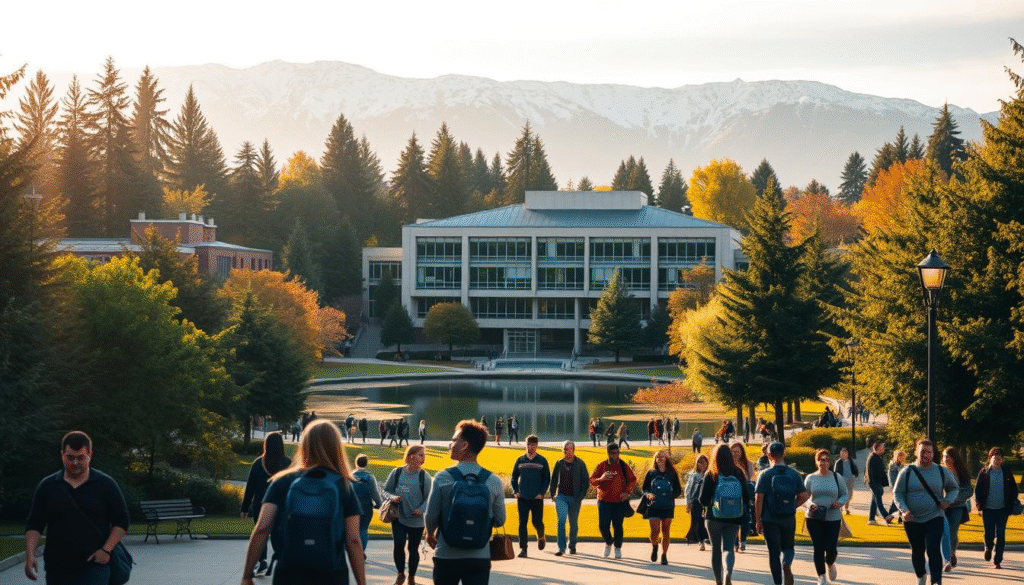
The beautiful campuses and surroundings make the student experience even better.
Career Prospects for Graduates
UBC graduates are in high demand worldwide. This is thanks to the university’s strong reputation and large alumni network. UBC also helps students prepare for their careers.
| Advantages | Description | Benefits |
| Academic Excellence | Rigorous academic programs | Comprehensive educational experience |
| Research Opportunities | Innovative research initiatives | Access to cutting-edge facilities |
| Campus Life | Diverse cultural and recreational experiences | Enhanced student experience |
Challenges and Considerations
While UBC has many benefits, there are also downsides. These include the competitive admission process and the cost of attending.
Competitive Admission Process
Getting into UBC is tough. Many students apply for a limited number of spots. This can make it hard for some to get in.
Cost of Attendance and Financial Considerations
Going to UBC can be expensive, mainly for international students. But, the university offers scholarships and financial aid to help with costs.
International Student Challenges
International students face extra hurdles. These include adjusting to a new school and dealing with visa rules. UBC has support services for these students.
| Challenges | Description | Considerations |
| Competitive Admission | High competition for limited spots | Challenging admission process |
| Financial Implications | Significant tuition fees | Need for financial planning |
| International Student Challenges | Adapting to new environment and visa requirements | Need for support services |
Strategies to Improve Your Chances of Acceptance
To get accepted at the University of British Columbia, you need to work on a few key areas. These include academic preparation, personal profile optimization, and a well-planned application submission. By focusing on these, you can make your application stand out and increase your chances of getting in.
Academic Preparation Recommendations
Getting good grades is key for a strong UBC application. It’s a good idea to take tough courses like Advanced Placement (AP) or International Baccalaureate (IB). Also, keeping a high GPA and doing well on tests like the SAT or ACT is important.
- Take challenging courses to demonstrate academic ability
- Maintain a high GPA to show academic consistency
- Prepare well for standardized tests like the SAT or ACT
Personal Profile Optimization Techniques
It’s important to make your personal profile shine. This means writing a great personal statement, getting strong letters of recommendation, and showing off your extracurricular activities. These activities should highlight your skills and character.
By showing off your unique strengths and experiences, you can make your application more appealing to the admissions committee.
Application Submission Best Practices
When you submit your application, following best practices is key. This includes sending in all required documents on time, double-checking everything for accuracy, and making sure your application is complete and organized.
| Best Practice | Description |
| Submit on time | Ensure all required documents are submitted before the deadline |
| Double-check accuracy | Verify that all information is accurate and complete |
| Organize your application | Ensure that your application is well-organized and easy to follow |
By using these strategies, you can improve your chances of acceptance at the University of British Columbia. This will make your application more competitive.
Who Should Apply to UBC: Ideal Candidate Profile
The perfect candidate for the University of British Columbia is someone who excels in school and has great personal qualities. They should also be involved in extracurricular activities. UBC wants students who are not just smart but also bring something unique to the table.
Academic Profile of Successful Applicants
Students who get into UBC usually have top grades in tough classes. The university likes it when students take Advanced Placement (AP) or International Baccalaureate (IB) courses. This shows they can handle hard schoolwork.
But, UBC’s admission team says grades aren’t everything. They look at more than just grades.
Extracurricular and Personal Qualities Valued
UBC really values activities outside of class. Extracurricular activities can be sports, arts, volunteering, or starting a business. The university wants students who are not just good but also passionate and active.
“We’re looking for students who are curious, motivated, and passionate about making a difference in the world.”
Program-Specific Candidate Recommendations
Each program at UBC has its own needs. For example, engineering students need strong math and science skills. Arts students might need to show off their language and cultural knowledge. It’s key to check what your program wants.
Knowing what UBC looks for can help students figure out if they’re a good fit. It also helps them make their application stand out.
Conclusion
Knowing the University of British Columbia’s acceptance rate is key for students wanting to attend. The acceptance rate shows how tough it is to get in. It’s a big deal for those hoping to join.
The University of British Columbia accepts about 52.4% of applicants. This rate changes for students from Canada and abroad. To get in, students need to meet certain admission requirements. These include good grades, English skills, and extra application parts.
What affects getting in includes:
- Academic preparation: You need to have the right grades and courses.
- Personal profile: It’s important to show your activities and qualities outside of school.
- Program-specific requirements: Each program has its own needs you must meet.
In conclusion, getting into the University of British Columbia is tough. It takes hard work and planning. Knowing the acceptance rate and admission requirements helps students prepare better.
Sources
This article uses data from trusted sources, like the University of British Columbia’s official website. It also draws from other educational resources. For the latest info, check out the UBC website.
Some key sources mentioned here are:
- University of British Columbia Official Website
- UBC Admissions
- Top Universities – University of British Columbia
These sources give insights into UBC’s acceptance rates and admission needs. They are great for students looking into UBC.
Looking into these sources ubc and references ubc can help you learn more about UBC. You’ll get a better understanding of its academic programs and how to apply.
FAQ
What is the average acceptance rate at the University of British Columbia?
The University of British Columbia’s acceptance rate is around 50-60% for students from Canada. For students from other countries, it’s even more competitive.
How competitive is admission to UBC?
Getting into UBC is very tough. They look at your grades, activities outside class, and who you are as a person.
What are the acceptance rates for different faculties at UBC?
The acceptance rates change by faculty. Engineering and business are harder to get into than arts or humanities.
How does UBC’s acceptance rate compare for domestic and international students?
International students face a tougher time getting into UBC. This is because there are fewer spots for them.
What are the admission requirements for UBC?
To get into UBC, you need good grades, English test scores, and a personal profile. You might also need letters of recommendation.
How can I improve my chances of getting accepted into UBC?
Work hard in school, make your personal profile stand out, and follow the application rules well.
What are the most competitive programs at UBC?
Engineering, business, and computer science are the most sought-after at UBC. They have lower acceptance rates.
What is the typical academic profile of successful UBC applicants?
Successful UBC students usually have great grades in tough classes. They also show they love their field of study.
How important is English language proficiency for UBC admission?
Knowing English well is key for UBC. You need to pass tests like IELTS or TOEFL to apply.
What are the key deadlines for UBC applications?
Deadlines for UBC vary by program. But most undergraduate programs are due in January. Some graduate programs have later deadlines.